Corporate Social Responsibility: 2016 Outlook and Trends
BLOG
BLOG

Some companies have always understood. Some only just now realize it. Some never will.
It comes down to this: People want to do business with people they like and trust. Easy, right?
We get it—we’ve gotten it since our founding in 1991. Do good. Have a purpose. Do right by the people and the world around you, and good things will come.
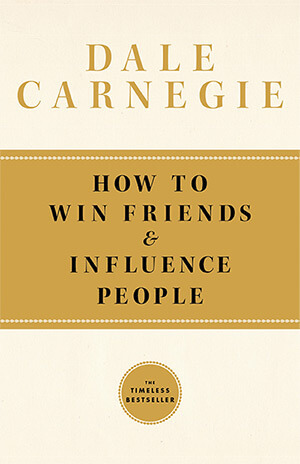
In his seminal work, How to Win Friends and Influence People, Dale Carnegie wrote: “The world is full of people who are grabbing and self-seeking. So the rare individual who unselfishly tries to serve others has an enormous advantage.”
It’s 2016 folks, and Dale’s been preaching this for 80 years. Listen up.
Before looking ahead at the trends in corporate social responsibility (CSR), first understand that for some companies, CSR itself is a trend. While TOMS, for example, was founded on the idea of CSR and the triple bottom line, some companies are just now getting on board.
It’s important to understand that today’s consumers expect more from the companies they do business with, and they reward purpose-driven organizations. The numbers bear this out. According to a recent survey by Lightspeed GMI, 79 percent of consumers believe companies that stay true to their values outperform others in their field. And for investors, 69 percent say they’re likely to purchase stock in a company well-known for its ethics. And in the cold, harsh light of the internet, your track record is in full view. Do good or be outed. Break consumers’ trust and you will be exposed. That trust is very difficult to win back. I’m looking at you, Chipotle.
So here we go, let’s look at the trends and things to consider in 2016 that will continue the push toward greater corporate transparency, sustainability, and responsibility.
A major focus for businesses in 2016 will be how to plan for and address the COP21 Paris Pact. More than just listing their CO₂ emission reduction efforts, companies will need to embrace carbon reduction as an operating strategy. They’ll need to position their efforts as a competitive move (and advantage) in the eyes of shareholders and customers. In the coming year, look for an integration of carbon capture and storage (CCS), tree planting, and chemicals to bind and drop CO₂ and methane from smokestacks.
We’re also sure to see more transparent reporting on the climate impact of growing, processing, manufacturing, and using products. Companies will be looking closely at their own practices and their supply-chain partners, and continue to try and close the loop on post-consumer waste.
Most of the larger, multinational companies see the writing on the wall and already are on board. Procter & Gamble has committed to reduce its emissions by 30 percent, and cosmetics giant L’Oreal says it will be “carbon balanced” by 2020.

Example of carbon sequestration. Photo credit: Wikipedia.
Employees are putting more emphasis on their employer’s values and contributions to society, and that trend will only gain momentum in the year(s) to come. This is especially true when it comes to Millennials, Generation Z, and the workforce of the future.
Looking back on the Lightspeed GMI survey, salary was the top priority for prospective employees. This is no surprise. However, the survey also showed company ethics and a commitment to CSR has quietly become employees’ number-two metric. Getting back to Millennials, this is even more important. While 68 percent of survey respondents over 35 sought employment at companies publicly recognized for their ethics, that number rises to 82 percent when it comes to Millennials.
The trend is clear: In 2016 and beyond, to attract the best workforce, companies will need to prove their worth, and show they’re committed to purpose and social good.
Oliver Russell is both a B Corp and a public benefit corporation. In our home state of Idaho (and really in general), we’ve been ahead of the curve on this front. Now other companies are recognizing the value of “B” status, and that it’s possible for purpose to exist alongside profit. In 2016, more companies will look toward “B” status (whether it’s as a B Corp or a benefit corporation) to show they’re committed to walking the talk.
Looking back on 2015, several high-profile companies chose to become benefit corporations. One of the more interesting examples was Kickstarter. On its blog, the company said the decision was easy. “There was not a single dissenting vote by a Kickstarter shareholder to re-incorporate as a benefit corporation,” wrote three of the company’s founding members. “More and more voices are rejecting business as usual, and the pursuit of profit above all.”
Here in Boise, the people behind Treefort Music Fest chose the B Corp route, and became the first music festival in the U.S. to do so. The festival’s founders were looking for more than just nonprofit status, and B Corp certification was the perfect fit. “This process and its end result filled our needs,” said Treefort cofounder Lori Shandro Oüten. “Further, because of the influential nature of the music industry, we felt we had an opportunity to shine a light on the responsibility any business has to identify and represent its stakeholders, not just its shareholders.”
Last year we blogged about the importance of corporate sustainability reports, but in 2016 it’s going to become even more important. And in some parts of the world, mandatory.
In 2014 the European Union passed a law that instructed publicly traded companies with more than 500 employees to include sustainability measures in their annual reports. This information includes “policies, risks and results” related to “social, environmental and human-rights impact, diversity, and anti-corruption policies.” In 2016, the law goes into effect and will impact roughly 6,000 companies. It’s currently estimated that, of those, approximately 2,500 already are engaged in sustainability reporting.
The notion of mandatory reporting surely won’t be an EU exclusive for long. A savvy business would be wise to get out in front of this rather than having to scramble to become compliant. That means having measurement tools and processes in place, as well as the personnel (and budget) necessary to complete the report.
Reporting also won’t be the sole domain of large, public companies. The Centre for Sustainability and Excellence recently examined 400 companies across the U.S. and Canada of all sizes and across a wide range of industries. Their research showed 82 percent of public companies already are engaged in sustainability reporting. Perhaps more interesting, though, is an uptick in reporting by small- to medium-sized enterprises (SMEs). The thinking is that, among this group, sustainability reports could be viewed as a competitive differentiator, and be used to attract new customers and grow the business.
So who’s already got this CSR thing down and knocking it out of the park? Many of the world’s largest multinational companies are either on the right track or setting ambitious goals for themselves.
Apple has committed to, in the very near future, source 100 percent of its energy from renewables.
CVS Health is on the right track. They’re the ones who, in 2014, cut out a significant source of revenue by halting the sale of tobacco products at their stores, saying it was “inconsistent” with their purpose. Gutsy.
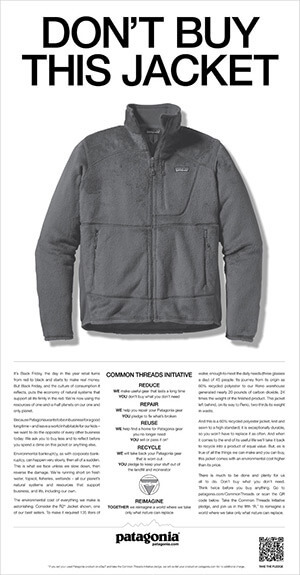
Then there’s Patagonia, who’s had CSR nailed for a while now. They were the ones who, in 2011, ran an ad in The New York Times on Black Friday telling customers, “Don’t buy this jacket.” Bold move. They continue to help their customers wring the most life out of their products so they don’t have to buy new. They also run an extensive program to take back past-its-prime clothing for reuse/recycle.
We know CSR. We practice it and we keep up on trends. Maybe you have a sustainability report or a CSR initiative that could use some help? We’d love to talk. Write us at info@oliverrussell.com.
Blog
We chronicle 12 months of measurable impact in our first public benefit report.
Blog
Use CSR data to your advantage - Don't let consumers' imaginations work against you.
Blog
A CSR partnership between HP and Kiva enables employees to invest in microentrepreneurs.