Brother, Can You Spare a Smile: The Case for Emoji
BLOG
BLOG

I held out for as long as I could. It was certainly many months—years, even. I wasn’t the last one to cave, but I put up a damn good fight.
The idea of a grown professional sending an email—or any online communication—that contained this :-) or this ;-) just seemed, well, silly. And kind of immature. But then…
As we all know, in the cold and impersonal world of online communication, it’s very easy for things to get…misconstrued. Let’s take an email exchange I had just the other day:
Coworker: “Hi Kevin, would you mind filling out the addendum for your latest blog post?”
Me: “Yep, that was next on my list—coming at you shortly.”
Now I thought very carefully about adding a :-) after my email, just to make sure I didn’t come off as terse or “snippy.” Sure enough, here’s what came back:
Coworker: “Hey, no worries, it’s not due until Tuesday, I was just hoping to get an early start.” I of course took this as “don’t freak out, I was just asking.”
Oh what an emoji could have done.
And that’s pretty much exactly why and how the emoji came about.
The man generally credited with the invention is Shigetaka Kurita, who in 1998 was working for Japanese mobile-phone operator NTT DoCoMo. In late ‘90s Japan, email was taking off and pagers were all the rage. These new mediums made communications shorter and more convenient but, like the email between me and my coworker, it also made it harder to discern the actual intent behind the message.
“If someone says Wakarimashita you don’t know whether it’s a kind of warm, soft ‘I understand’ or a ‘yeah, I get it’ kind of cool, negative feeling,” Kurita told The Verge. “You don’t know what’s in the writer’s head.” For Kurita, making the leap from character-based emoticons like ;-) to graphical emotional indicators wasn’t such a stretch. The actual implementation was a fair bit more difficult, but it didn’t take long for the emoji to become ubiquitous. Regulated, even.

In order to maintain a consistent emoji experience (and avoid emoji entropy), the Unicode Consortium stepped in several years back to become the official sanctioning body for all things emoji. The consortium provides design guidelines, works to improve cross-platform interoperability, explains inclusion criteria, provides an emoji FAQ, and serves as a repository for emoji-related media articles and presentations.
The consortium rules over the emoji with an iron fist, deciding which are included in the canon and which are not yet worthy. Because, yeah
Yes, yes it is. Emoji are ingrained, entrenched—inescapable. They’re in our emails, our text messages, our Facebook posts, and our tweets—and they’re not going away. These events all happened just this past year:
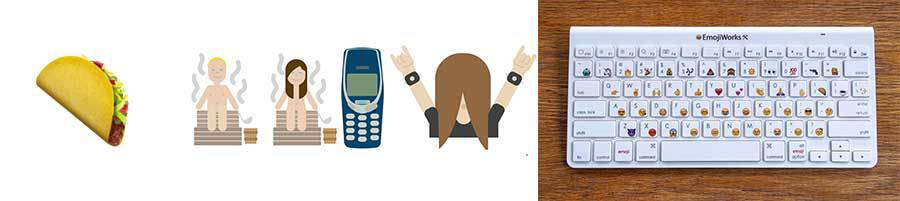

Cleary the “I’m only kidding” winky face has evolved into big business, and corporations have latched onto the craze. Some recent campaigns have been very clever, and some have even managed to elicit an emotional response.
Who remembers the “gee-wiz” moment when Dominos announced that by simply tweeting a pizza emoji you could summon a piping-hot pie straight to your door? No matter your opinion of Dominos’ product, I think we can all agree that’s pretty slick.
Coke also recently jumped into the fray with a custom Twitter-designed emoji. By tweeting out #ShareaCoke, users are treated to an image of two Coke bottles “clinking” together. Simple, sweet, effective.
And in a stroke of genius and goodwill, Unilever’s Dove brand created the #LoveYourCurls campaign. Those eagle-eyed soap peddlers astutely noticed that all female emojis have straight hair. To right this wrong, they created a curly haired version which appears when you tweet #LoveYourCurls. Very nice, very inclusive, very typical Dove.
One thing emojis don’t communicate well is vitriol. “They are cartoons, first of all,” notes Adam Sternbergh in a fine article for New York magazine. Sternbergh goes on to say that for Millennials, raised in a digital environment and navigating digital relationships, the emoji “serves as an antidote to ambient incivility.” His is an excellent point; for Millennials, Generation Z—really for us all—there’s a lot to like about a tool that “counteracts the harshness of life in the online world.”
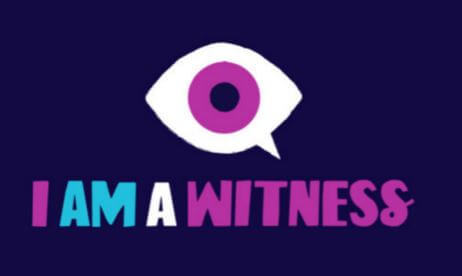
So what if an emoji could be used to help change negative behavior, or at least wave a scolding finger its way? That was the idea behind a recent anti-bullying campaign launched by the Ad Council. Dubbed “I Am A Witness,” the campaign encourages kids to use a custom-made eyeball emoji on social media and in text messages to call out cruel comments and harassment. The people behind the campaign claim they wanted a way for kids to “make a statement against bullying and show support for its victims.” And that’s some pretty good stuff.
Pictographs, ideograms—we’ve always used pictures to express ourselves and communicate ideas. The emoji simply moves that conversation into the digital age. A single emoji can convey an entire sentence or help us express our feelings when words fail. For brands, they can put a human face—and touch—to the company and its products. Ultimately, emojis bring commonality. After all, everyone knows a smile when they see one, no matter what language they speak.
Blog
Pokémon Go brings gaming into the real world and customers right to your door step.
Blog
The naked truth about the importance of branding.
Blog
Let's go - we're building on our heritage and doubling down on purpose-driven work.