Advergaming kind of sucks, but it doesn’t have to.
BLOG
BLOG

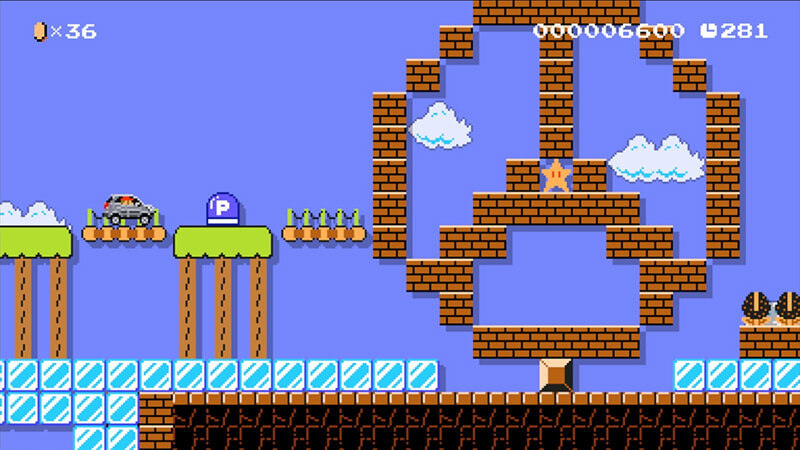
I’m addicted to Super Mario Maker, a game for the Nintendo Wii U console where you can create your own Super Mario levels. You haven’t played it yet? I’m so sorry. Your life is most certainly very dull and devoid of joy.
In addition to levels made by players (of which there are several million), Nintendo has partnered with companies like Southwest Airlines and Daimler AG to offer branded Super Mario levels which you can download to your own console. By completing these levels, players can equip Mario with unique in-game items like a Southwest jet or a tiny Mercedes Benz. Product placement FTW!
This sort of in-game advertising—advergaming as the marketing wonks call it—is nothing new. Way back in ’83, the Kool-Aid Man got his very own game for the Atari 2600. In the true spirit of all things retro, you could get the game through mail-order, by sending in proof-of-purchase points. Drink more sugar! Play more video games! The marketers always know what’s best for kids, don’t they? Oh YEAAHH!
Fast forward to the new millennium. In addition to pushing sugar and mindless consumption, marketers decided that politics had a place in the advergaming game as well. Ads for Barack Obama’s Presidential campaign were distributed across several games on the Xbox Live network. It proved to be an effective way to reach 18- to 34-year-old males, and demonstrated the campaign’s understanding of non-traditional media.
I don’t think that jamming marketing content directly into media like tv, literature, film, and video games is inherently evil. It’s often done in a fairly ham-fisted way and typically offers little social value, but what if that power were used for good? What if social and environmental causes were advanced through advergaming? Could a dude with a screen name like xxxKillzone420xxx be convinced to put down his controller, leave the house, and try to make a positive change within the community around him?
It’s not as crazy as you might think. The concept of games for good is already well-established with significant momentum. Games For Change is just one example. But, there are many challenges to be overcome before real change can occur through gaming.
The biggest challenge is both simple and tremendously difficult: getting people to care. According to Mary Flanagan, Dartmouth College professor and director of game research laboratoryTiltfactor, simply trying to teach players about bad things and hoping empathy will arise naturallyis a flawed strategy. Instead, she recommends grounding games in psychological design and striving for a simple but elusive goal: make the game fun to play.
"Create a player experience that's fun first," says Flanagan. "If the game is about bias only, it [won't] work. If you remove the fun, [players] will feel like they're being preached to and it's not a game any more, there's no agency.” There is abundant research going back decades to support this idea, and every game project should take it into consideration.
While there are many examples of games intended to inspire players to be a force for social good, results are mixed. HopeLab is one great example of a team creating games that are in turn creating real change. However, that success is not mainstream—I think very few of us could easily point to a specific example of a game we’ve actually played that directly inspired us to get out there and change the world.
That doesn’t mean we should give up. With the amount of time we spend playing games continuing to rise, it’s a vehicle with huge potential to create real change. Just like we do when Mario falls into the abyss, we have to look at every “game over” not as a failure, but as a chance to roll up our sleeves and try again.
Blog
Pokémon Go brings gaming into the real world and customers right to your door step.
Blog
Virtual Reality is here. Has your company started using it to tell its story?
Blog
These three new food companies are revolutionizing the food industry.