Merchants of Doubt and Marketing
BLOG
BLOG

Several years ago I quit my job in advertising and went back to school to study biology. Plant eco-physiology. Invertebrate zoology. Two years of chemistry and physics. These classes made it possible to understand why things lived where they lived and the incredible adaptations that made it possible.
Another thing I loved about science: the absence of bullshit. Science teaches you how to ask questions, how to answer them and how to report the results with credibility and humility. Florid adjectives and glossy presentations are frowned upon. I had to unlearn a lot of stuff from advertising.
Certainly I respected scientists before this period, but even more so after working with them and understanding more about their daily lives and passion for their subjects. Trust me, these folks are not in it for the money.
Unfortunately, with the help of the marketing industry (go, us!), there are some big exceptions to this rule.
The other day, the New York Times ran a story about how Coke is funding scientists whose findings attempt to downplay the vast evidence that sugary drinks contribute mightily to obesity and the epidemic of diabetes. They’ve started a group with Coke’s money—the Global Energy Balance Network (can you think of a more focus-group-approved name?).
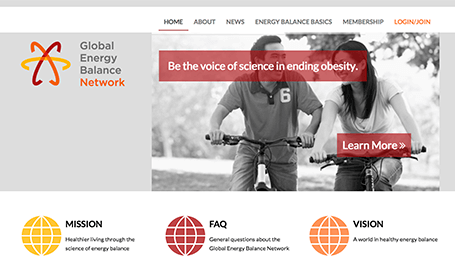
According to these scientists, the problem is not what or how much Americans eat and drink; it’s our lack of exercise. In other words, it’s your problem, not Coke’s.
The truth is, exercise burns far fewer calories than most people think. According to a physician quoted in the article, it takes three miles of walking to offset a single can of Coke—the average American only walks about 2.5 miles over the course of an entire day.1 Compared to the impact of an improved diet, the effect of exercise has proven to be minimal. Watch the documentary “Fed Up” on Netflix for more on this and the activities of the sugar industry.
Does this mean I feel people shouldn't drink Coke? No. But I do think they should be able to get clear information they need to make that decision. Coke is just the latest example of a company or industry recruiting scientists with fat grants to generate findings that inject doubt into the minds of Americans and delay regulatory action.
There was a time when global warming was on the way to becoming accepted by most Americans as a fact. Even Republicans like John McCain and Newt Gingrich conceded the scientific consensus was overwhelming. But energy industry groups fought back hard to manufacture doubt and fear with the help of a handful of industry-funded scientists. Now you’d be hard-pressed to find a Republican who doesn’t believe global warming is a hoax promoted by liberals to undermine America. In the meantime, the world cooks.
The 2014 documentary “Merchants of Doubt” chronicles the web of PR pros, funders and media personalities behind these disinformation efforts, a phenomenon that goes back to the fights over smoking, acid rain, the ozone hole, dioxin, and asbestos to name a few. In the same way, “Inside Job,” a documentary about the 2008 financial crisis, lifts the lid on the economists and academics who legitimized the Wall Street practices and government policies that led directly to the Great Recession.
If you’ve ever doubted the efficacy of marketing and PR, the “success” of these disinformation campaigns should put that to rest. The tools we wield in our industry are powerful—for good or otherwise. In the hands of a few well-moneyed ideologues—the number of which seems to be growing by the minute—they’re incredibly destructive to our country.
A lot of people claim to hate advertising. But an ad is easily recognizable for what it is—paid, one-sided advocacy. It either persuades or it doesn’t. This type of PR—one that doesn’t identify itself, that exploits the credibility of science and journalism to the detriment of your friends and family—is worse, more despicable than any ad will ever be.
Fifteen years ago this summer, after an internship at a research station above the Arctic Circle, I had to make a decision. I wasn’t sure if I should continue to pursue science or return to marketing—I just knew I couldn’t do both.
1. http://well.blogs.nytimes.com/2010/10/19/the-pedometer-test-americans-take-fewer-steps/?_r=0
Blog
Here are three ways businesses can substantiate their social impact.
Blog
Values should shape actions. Duh.
Blog
Can corporate values provide the mojo to propel productivity and profitability?