
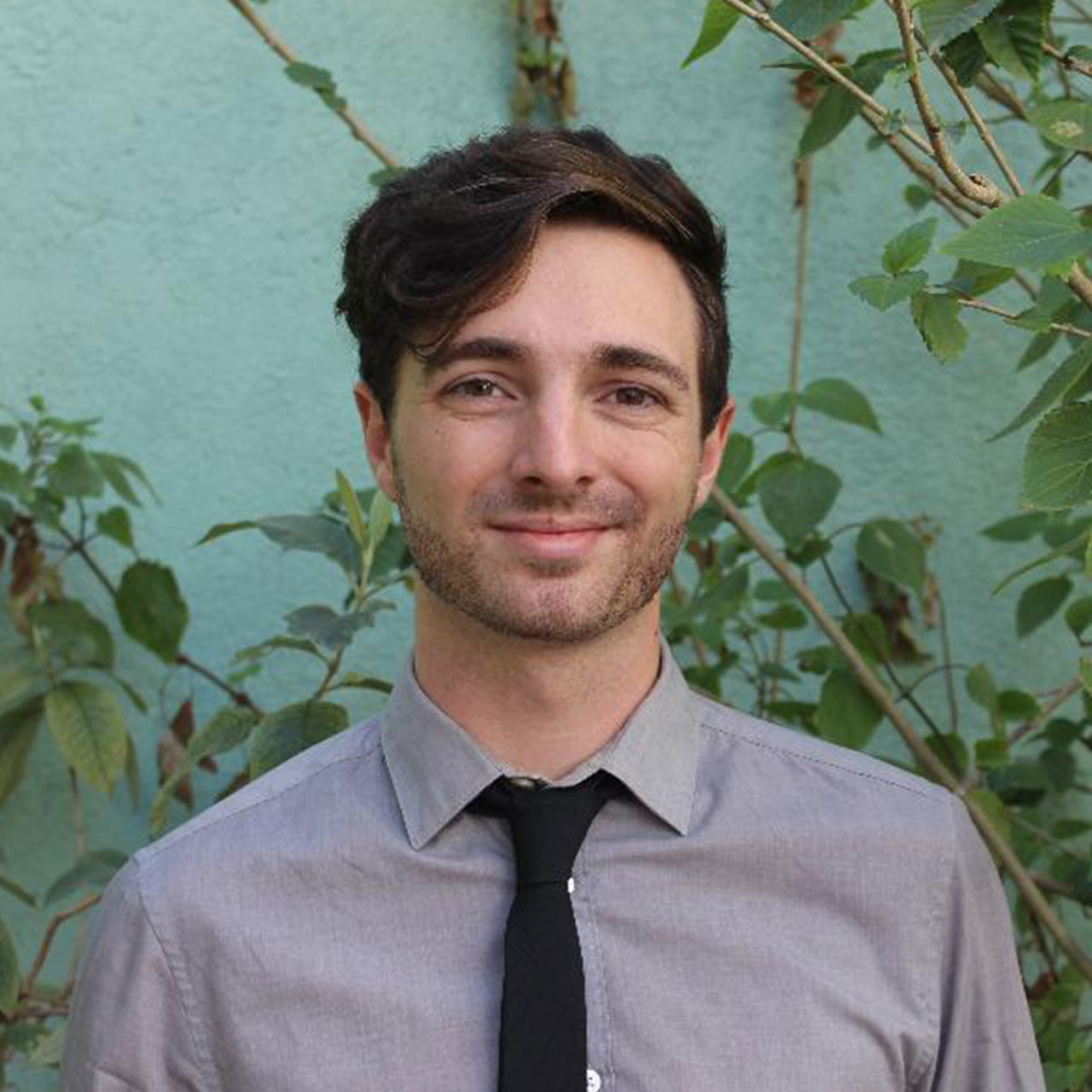
Curt Bowen gets after it. And he gets his hands dirty in the process. He grew up on a small organic farm in Idaho and has worked in environmental and rural development for more than nine years, the last five at nonprofit Semilla Nueva where he leads efforts to help rural Guatemalan farmers. He is the recipient of the Ignite Good Millennial Impact Challenge, the Ashoka Emerging Innovators award, and was a finalist for the Unilever-Cambridge-Ashoka Sustainable Entrepreneur of the Year. Earlier this year, he was also named to Forbes’ 30 under 30 list of social entrepreneurs who are leveraging business tools to solve the world’s most pressing problems.
How did you come up with the idea for Semilla Nueva?
I helped build a house for a family in Central America when I was 18. I became obsessed with the question of how we could help more families to not need houses, not need to immigrate illegally, not need handouts. We decided to teach farming techniques because the majority of the world’s poor are employed by agriculture. Small tweaks in farming methods can sometimes mean huge increases in their incomes.
So what’s new on the farm these days?
Semilla Nueva’s model is built around helping farmers identify new farming techniques that can make a big difference in their incomes, soils, and nutrition. One of these technologies is the pigeonpea. Pigeonpea is a small bean that farmers can grow in between the rows of their existing crops. They get their existing crops, and they get pigeonpea as well. We’re helping farmers try new pigeonpea varieties with even more benefits, some taste better, some produce firewood, some can be used for animal feed.
What’s your goal at Semilla Nueva?
The goal is to help farmers double their income through this little pigeonpea bean, by increasing productivity and also using it as feed for small animal businesses. We want each family to be able to produce chickens, pigs, and other animals instead of spending their little income to buy them.
There’s an educational component beyond agriculture as well, isn’t there?
We want to work with these families to invest this income into education for their kids. A lot of families tell me that the only hope for their kids is to send them across the border. They know the risks, but they don’t see another way. Our whole goal is to change that mindset and find ways they can make a future for their kids now.
What’s the biggest challenge sustainable agriculture faces in Guatemala?
The climate is changing at the same time as Guatemala’s population continues to explode. Guatemala is only half the size of Idaho, but with a population of 16 million. (Editor’s note: Idaho’s population is 1.6 million.) Over a million of those people have been born in the five years I’ve been here. So you have degrading soils, more and more people, and worse droughts and storms. It’s a recipe for disaster in a country where half the population is employed by agriculture.
Is there a concept of social corporate responsibility in Guatemala?
Yes. It’s small and growing. I think the question that companies need to ask is, “what is the most effective way I can spend my funds? What impacts can I make with how I source my inputs and labor?”
Do you have plans to transfer your success in Guatemala to other countries?
Through modeling. We hope that the work we do shows that ideas can work. One such idea is high-protein corn. Malnutrition is normally terrible in countries that are highly dependent on corn for the population’s diet. This is because corn is so nutritionally empty. There is a lot of work being done now to increase the nutritional value of corn. Farmers can grow corn and eat tortillas just as they have for thousands of years, but their families will be more nourished. Right now we are starting a study with 500 families with young kids eating high-protein corn and 500 families eating normal corn. Our hope is that we can see a significant difference in the malnutrition levels.
And from there?
This study will be published with the help of Harvard, and through that we hope to show the rest of the world the difference this strategy can make. My hope is that in 10 years, most of the corn in Guatemala will have higher nutrient levels, and thus make a huge difference for the coming generations.
Change is hard—do you have any tricks you’d like to share for making it easier?
Work Smart. You have to stop and think about how to best make a difference, and then you have to take your best ideas and work as hard as you can on them. All of the books on making a successful startup are normally really applicable to a good non-profit as well. The advice isn’t perfect, but the ideas normally apply.
If you could change one thing in the world right now, what would it be?
Democracy only works if you have educated people. If we really believe in democracy in our country, or in the world, we need to make sure that we focus as much as possible on producing human beings that could be good citizens, that vote in intelligent ways. Education, for me, isn’t just classes, it also has a lot to do with values. How do we teach the tens of millions of people born every year good values? How do we teach them to value hard work? To think about the future? To focus on others and not just themselves? How do we help them prepare for economies that are changing so quickly? We all worry so much about the economy, wars, etc. If I could change one thing right now, I would change the way that we worry about them. Instead of thinking about the surface level stuff, we’d think about the deeper root causes, which is how we are creating the next generations to act. That, I think, should be the task of our civilization.
Do you have any pets?
I was in 6 countries in March. I need to retire or get married before I can have a pet…I have some house plants.
When you were a child, what did you want to be when you grew up?
An Army sniper or Air Force pilot/eventual astronaut.
What are you reading right now?
The Origins of Political Order by Francis Fukuyama. I can’t think of a better book for trying to figure out what it would take to improve a government, like Guatemala’s, or protect one that is in decay, like America’s. The thing that most people don’t get about international development is that the root cause is normally the relationship between people and their government. If a government is hyper corrupt and people expect it to be corrupt and don’t fight to change it, then what good can you do as a charity worker? You help 20 kids, or 100 kids, get an education. But after you are done the country’s normal schools are still broken, and there are another 20 kids that will take their place when you are back stateside with a clean conscience. We have to think systematically, we have to think politically, if we want a big change—if we want a real change. Books, like Fukuyama’s, ask the question of the process it took for some governments to become effective, while others have stayed about as broken as they were 200 years ago. It’s a crucial question everyone should think about before (or right after) they go build a house, or a school, or a church, or whatever in another country. That was the process for me.
Watching?
TV has gotten so much smarter in the last few years. It’s been amazing. True Detective,Homeland, House of Cards, Game of Thrones—just the normal stuff, I guess.
Who inspires you?
Norman Borlaug and Dwight D. Eisenhower. Borlaug because he had a single mission, to keep billions of people from starving and prevent another world war. I think that is what was at stake in the Green Revolution. What would have happened if India, Mexico, Pakistan, and much of the rest of the world had suffered decades of famine and starvation? Hungry people fight wars far more easily than full ones. I draw a lot of inspiration in how a quiet and driven person can change the lives of billions through character, personal sacrifice, and intelligence. Eisenhower because he led some smart investments in this country that we still use today, and that have greatly helped our country grow. I think a president like Eisenhower wouldn’t even be possible in our current political climate, and I think that shows how both sides of the political spectrum need to make some big changes.
Rock, paper, or scissors?
You have to look the person in the eye, and feel that one out. That’s like asking, what’s better for a first date, Italian or Thai? It’s a bad question.
Who are you following online?
Owen Barder, Dani Rodrik, Duncan Green, and Francis Fukuyama—they are some of my favorite economists, development experts and political theorists. Much of the theory and inspiration for Semilla Nueva comes from their books. If you want to really, really get into international development, you have to read. You have to learn what has worked and failed in other places.
Who is the most progressive nonprofit or business leader you know?
Paul Polman, CEO of Unilever. I had an excellent lunch with him in London last year, as part of the Social Entrepreneur of the Year Award, for which we were a finalist. I think he has an incredible vision for bringing purpose to a vast multinational corporation and using it as a vehicle for good. He talked about things such as how Unilever was creating better standards for the palm oil they buy to ensure that no rainforests were clearcut in the process, and then working to make that requirement a law in various countries. He talked about citizenship, which is something I believe strongly in. Companies may be multinational, but that doesn’t mean they don’t have to be citizens of where they are working.
What’s one question you’d like to ask yourself—and answer?
How can I live a good life? How can I live a life I’d be proud of? I don’t think there is an answer to that question that’s definitive. I think we come up with deeper and deeper answers. We have to live by those answers that we’ve come up with, but not stop asking the question.