Exploring Today's Creative Culture of User-Generated Content
BLOG
BLOG

I’m old enough to remember when brands feared and fought giving up control of their brands, yet young enough to have embraced and enjoyed (and valued) the advent of our new user-generated content (UGC) culture where 25% of the search results for the world’s top 20 brands are links to UGC1.
The term “user-generated content” seems to have entered the mainstream around 2005, but the notion of user-generated content is old school, really—its genesis is testimonials, a quote from a satisfied customer. This, of course, was largely limited in the pre-digital world to a pre-defined audience of readers or viewers you reached via paid advertising or in a PR campaign.
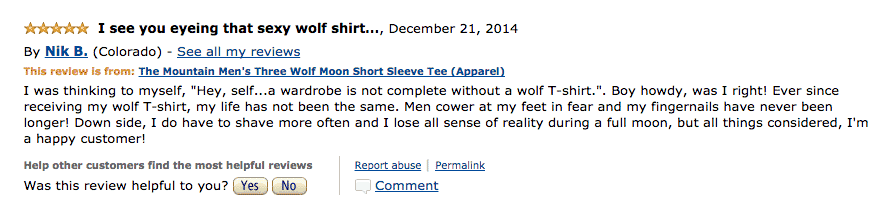
Today’s mobile user-generated content version is highly shareable and based and all about story, images, videos, and comments. Yesterday’s testimonials are today’s online customer reviews, which have become the second most trusted form of advertising after earned media.2
When I started this article, I thought I’d begin with fellow B Corp Patagonia’s iconic print catalog as an early example of user-generated content. That may have been the initial idea, but turns out the fantastic photos in the catalog didn’t come from novice photographers.
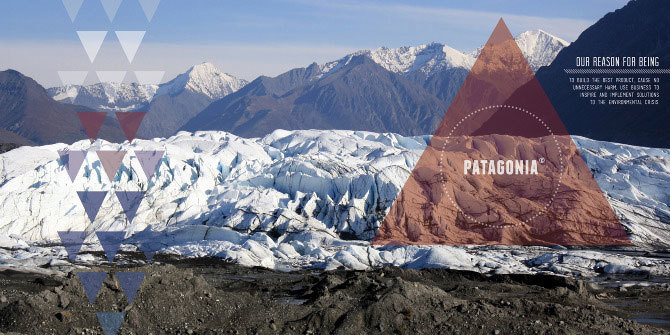
At this point in time, it’s now a semi-quaint anecdote to today’s modern UGC culture, so I’ll turn it over to Vincent Stanley, Director of Patagonia Philosophy, to tell the story:
“I'm afraid I think this story doesn't pan out as well as it promises….
“We thought it was a neat idea. Maybe we'd get some great photos with little effort on our part.
“We solicited photos but never ran any of them. Or maybe one or two. If we did run them, we would have paid for them. We were strict about that. Customers loved the idea but the submissions were of snapshot quality. My mom, for instance, sent one in of her posed awkwardly on x-c skis in her front yard, wearing a fleece jacket.
“I don't remember the number of submissions but it was huge; eventually we stopped inviting people to submit. It was work to thank everyone and turn them down.”
Of course, back then “snap-shot” quality meant something entirely different than what people are able to produce with today’s smartphones.
Patagonia’s marketing innovation at the time was to take photos of the best climbers and other athletes in the most demanding conditions, which meant that the company needed to find photographers capable of performing the same activities so that they could capture images in harsh and sometimes harrowing conditions. Many of these photographers were cultivated by Patagonia for this type of challenging assignment.
“We ran beautiful, full-bleed, full-page photos throughout the catalog. The customer submissions didn't go with that. Am didn't work with pro,” said Stanley.
Fast forward a few decades to today’s currency of UGC and Pro often finds itself working with Am—sometimes well, sometimes uneasily.
Today, Patagonia employs UGC across its social channels, using Tumblr submissions as a primary source of ongoing content that is used across other relevant platforms.
“People aren’t paid, but are credited for their photo, which is mostly what an amateur photographer or fan is looking for as a fan of the brand,” says Andreas Herr, Patagonia director of digital marketing and energy.
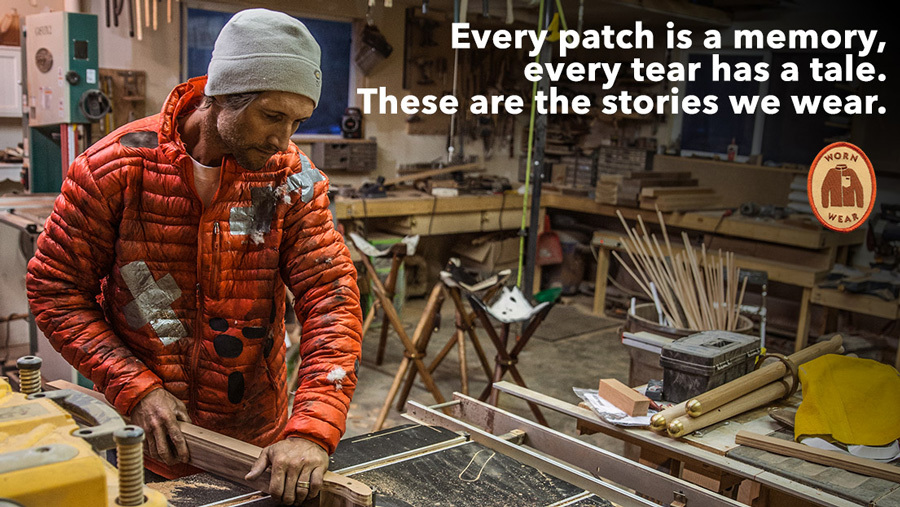
Much of this content finds its way into the company’s Worn Wear® sustainability storytelling, where Patagonia encourages its customers to share stories about their favorite products and why they’d rather keep using and repairing them instead of replacing them with something new.
And if you’re a die-hard aficionado of duct tape, you’ll love the image that anchors the Worn Wear® section on the Patagonia website, along with the stories you’ll find shared there.
In some shape or form, every brand now participates in user-generated content. But the smarter ones are encouraging and directing it in hugely successful campaigns.
A couple of user-generated content examples are from fellow B Corp Warby Parker and Greek yogurt maker Chobani.
When Warby Parker launched its home try-on service for its eyeglasses, it encouraged its customers to post photos of themselves to social media networks with the hashtag #WarbyHomeTryOn. The selfie generation responded mightily—spreading awareness for Warby Parker AND getting feedback on new specs from online friends and followers.
Chobani asked its customers to show a little love in its “Real Love” campaign—and they responded with real stories from real Chobani lovers. Fans posted original videos, photos, and adulation on social media about their favorite yogurt. Chobani then turned these assets into user-generated content advertising across its own networks, using the videos on its website, tweets on billboards, and messages shared across social media.
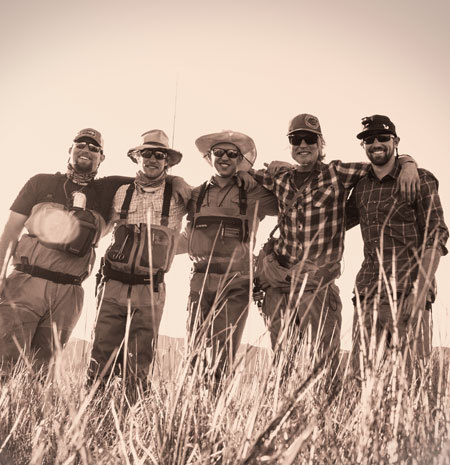
A user-generated photo for Mountain Health CO-OP. Image credit: Ray Gadd
Closer to home at Oliver Russell, we’ve employed user-generated content in a couple of interesting ways over the past year.
A user-generated photo for Mountain Health CO-OP. Image credit: Ray Gadd
For our client Mountain Health CO-OP, we created a user-generated content contest for CO-OP members to send us their lifestyle photos. We received images that we were able to use on the CO-OP website, which was especially appropriate for a membership-driven movement. It also enabled us to engage with the membership and economically acquire images that fit the style of the nonprofit organization, which must return any profits to membership in either the form of expanded benefits or reduced premiums. You can read more about our work on behalf of the CO-OP here.
We also developed a popular section of our own website to laud Change Makers from leaders in corporate social responsibility to individuals who are working to solve social and environmental problems. They range from a founder of a community-minded, socially inspired indie music festival to a consultant and leader in the B Corp movement.
We conduct informal, back-and-forth email interviews with these change makers—they’re fun, insightful and provocative as hell! This approach allows us to honor these social entrepreneurs, use our platform and social networks to expand awareness of their initiatives, i create original, cost-effective content marketing for our website.
Now that’s what I’d call a mutual public benefit.
1 ADWEEK, December 2013.
2 Nielsen, April 2012
Blog
There’s not an app for that.
Blog
Stop cramming important stuff above the fold. It's poor user experience and looks bad.
Blog
Pokémon Go brings gaming into the real world and customers right to your door step.