Will Millennial Consumers Change Energy?
BLOG
BLOG

As a certified B Corporation that uses the power of business to solve social and environmental issues, we do a lot of thinking about ways to minimize our energy consumption—and also how to promote new technologies and products that work in parallel with this objective.
That’s why 2015 could be a watershed in these energy-efficiency marketing efforts—it signals a huge demographic shift in America’s population as Millennials (born from about 1980 to 2000) surpassed the Boomers (ages 51-69) as the nation’s largest living generation.1
Tech savvy, big on social impact, with an annual combined spending power of more than $200 billion—Millennials are primed to change the way most industries do business—and energy is no exception.

In a recent interview with U.S. News, Steve McBee, CEO of NRG, the nation’s largest independent power producer, talked about the company’s efforts to engage Millennials and the changing face of energy. “What you see happening is individuals demanding more resources, more convenience, more customization and more affordability. And if you think about how poorly the energy industry does all of those things…this is going to be a big challenge for that space,” he said.2
It’s easy to see these changes in other industries. Over the last few years, brick and mortar stores have slowly given way to online retailers—hotels to Airbnb, cable TV to Netflix, retail stores to Amazon, and the list goes on. Each of these industries has been uprooted by consumer-centric products built on new technologies that keep the consumer constantly informed and connected to their service
I used to sell uninterruptible power supplies, mostly large switched rack power distribution units that provide advanced power management solutions for government and corporate facilities. These units were large black metal boxes often hidden away in the basement where they were occasionally visited by an IT tech for maintenance. Not exactly sexy tech, but these units provided a valuable service—a constant power supply that actively managed and monitored its usage.
That was back in 2007. Flash forward to the April 2015 announcement of Tesla’s Powerwall, a home battery that charges using electricity generated from solar panels. Suddenly energy storage solutions have become elegant, wall–mounted, consumer-empowering products that not only give you independence from the utility grid and the security of an emergency backup, but also come in your choice of color. The Powerwall quickly became a hit, reaching $800 million in reservations in just 30 days. To put that number into perspective, it took the first iPhone three months to reach $1 billion in sales.3
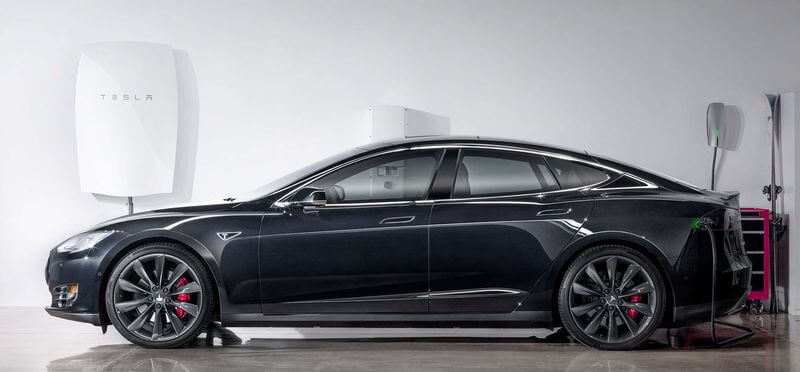
It remains to be seen if the Powerwall makes sense from a cost to performance standpoint, but consumers seem to be willing to pay more for the environmental benefits and the ability to control how they use their energy.
Residential solar isn’t new. In fact, the White House had solar energy for a brief period in the late 70’s and early 80’s. What’s new is the rising speed at which the residential solar market is growing. According to the GTM Research and Solar Energy Industries Association (SEIA) report for Q2 2014, solar energy accounted for 50% of new power in the United States.4 Looking ahead, the SEIA and GTM Research expect the residential solar segment to grow 55% year-over-year (2013/2014) as cost for rooftop solar continues to decline.
These cost savings are at the top of consumers’ minds in a recent survey by SolarCity. When asked about their primary motivation for purchasing solar, respondents across generations listed ‘save money‘ as their top response—with Millennials at 74%, Gen-X at 84%, and Boomers at 86%.5 Furthermore, 71% of Gen-Xers said they would likely install solar panels on their home at some point in the future.
Those numbers are likely to increase as the cost of solar panels, installation, and maintenance continues to decline. Pair this with new solutions in home energy storage, monitoring, and management and solar may become the standard choice for consumers moving forward.
For Millennials the choice to adapt new, more personalized energy solutions like rooftop solar and the Powerwall makes sense. They grew up digital natives and are 2.5x more likely than the rest of us to be early adopters of new technologies.
Then there is the corporate social responsibility (CSR) aspect of these new technologies. Brands with meaningful CSR stories are at an advantage as consumers increasingly weigh the social and environmental costs of the products and services they purchase.
For solar and traditional energy providers, CSR should be at the heart of your marketing efforts, sharing your story with both potential consumers and future employees. This is something Tesla has done very well with each product they have introduced, not only sharing their CSR story, but calling their consumers to action. During his introduction of the Powerwall, Elon Musk made the following statement about moving to clean energy: “It’s something we must do, and we can do, and we will do.” That’s a powerful story in just a few words, calling both the company and the consumer to action, a moving manifesto that extends not only to the Millennial generation, but to us all.
1 Source: U.S. Dept. of Health and Human Services National Center for Health Statistics for the sake of clarity we will be using age ranges defined by Pew Research - Millennials (18-34) | Gen X (35-50) | Boomers (50-68) (69-86) | Silent (69-86)
2 Source: U.S. News – Energy Giant NRG Sets its sights on Millennials. (http://www.usnews.com/news/special-reports/energy-of-tomorrow/articles/2015/01/15/energy-giant-nrg-sets-its-sights-on-millennials)
3 Source: Inhabitant – Can Tesla’s battery hit $1 billion in sales faster than the iPhone?
4 Source: GTM Research and Solar Energy Industries Association (SEIA) report for Q2 2014
5 Source: http://blog.solarcity.com/insi...
Blog
Millennials are moving and shaking up the workplace—but why? What motivates this generation?
Blog
A startup puts purpose at the center of its culture and wins with millennial employees.
Blog
Have Millennials really abandoned the suburbs for the city?