Reimagining Education Through Design Thinking
BLOG
BLOG

What happens when you put 153 high school juniors in a hockey arena for 24 hours and challenge them to reimagine learning in Idaho?
That was the question being asked at this year’s 24-Hour Think Challenge, a two-day event held at CenturyLink Arena presented by the J.A. and Kathryn Albertson Foundation (JKAF) and One Stone, a student-led nonprofit organization designed to make students better leaders and the world a better place.
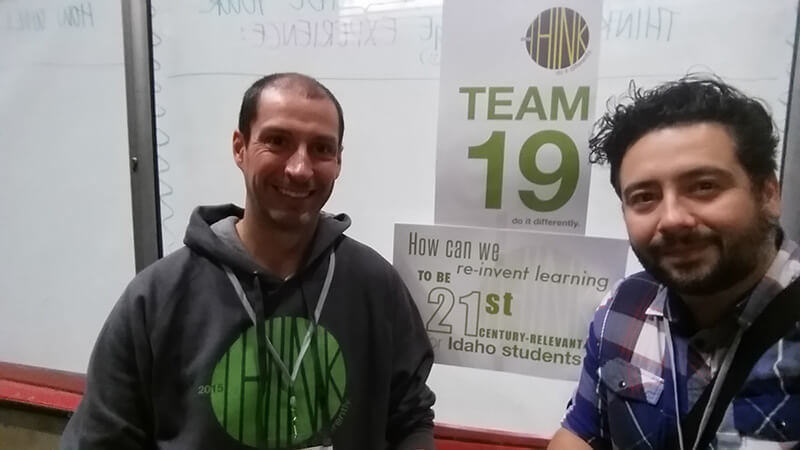
Oliver Russell's New Business Director, Jay Saenz, teamed up with Tyler LaDouceur to coach a group of students through the design thinking process, and encourage them to share their voices and ideas on redesigning Idaho’s education system. If you are unfamiliar with design thinking, it’s a methodology used to solve complex problems and find desirable solutions by considering the problem from an insider’s perspective—rather than outside in. More info can be found here.
The event was filled with inspiring speakers and tools to help provide the students a framework to collaborate, empathize, and ideate solutions around repairing our education system. The Think Challenge culminated with 19 groups of students from 20+ high schools pitching their concepts in front of approximately 350 community members from across the Treasure Valley.
It was moving to hear the passion from these young students looking to change a system that’s failing them. The statistics are alarming: Idaho ranks dead last in the nation when it comes to high school students who go on to college. In fact, only 45 percent of Idaho seniors attend a two- or four-year institution. By third grade, nearly one third of students won’t be reading at grade level. By eighth grade, nearly half of students aren’t proficient in reading and math. These are big problems for our state, especially considering Idaho’s workforce will demand substantially higher levels of education than they currently employ by 2018.
The J.A. and Kathryn Albertson Foundation has demonstrated a commitment to transforming our education system and moving it forward to meet the future demands and challenges of Idaho’s businesses. Since 1997, JKAF has invested almost $700 million in Idaho students, teachers, and schools. JKAF has also piloted several education initiatives, and the Think Challenge, now in its second year, is just one example of how they’re looking to improve students’ ability to learn
Personally, I was blown away by this event. The kids were so passionate and surprisingly realistic about the changes that could help Idaho students learn. Jay and I actually found ourselves pushing them to think outside the box and reimagine learning and learning environments—thinking beyond the easy solutions and imagining something that’s out of this world. I was surprised with how engaged each and every student from our team was in our group discussions. They worked very well together and, despite being exhausted from not really sleeping the night before, were very good working on a tight timeline on day two in anticipation of their community presentations.
There were a lot of consistencies from each group in what they were looking to accomplish in the schools. They want more flexible learning environments, a lot of students wanted to do away with testing, they want more opportunities for hands-on learning experiences and access to internships, and they want their voices to be heard.
Upon completion of the event, exhausted and reflecting on everything that transpired over the two days, I considered myself to be very lucky to participate. To hear the speakers involved and help guide our team as they presented their vision to the community was a tremendous opportunity. I thought a lot about the J.A. and Kathryn Albertson Foundation afterwards, too. Their involvement and commitment to creating new opportunities for learning throughout Idaho is incredible. Collaborating with One Stone to host such a unique event—something unlike anything else across the nation—is pretty special.
As a parent, the stats blow me away. Although my wife and I work hard to help our kids succeed in school, I’m still concerned about Idaho’s education system. I take solace with the continued commitment the J.A. and Kathryn Albertson Foundation is providing Idaho’s school system and hope their support gets other state leaders to do the same.
One of the tenets of the design thinking process is that great design starts with empathy. Yes, empathy—because understanding what others are experiencing and feeling is pivotal to providing them with the tools/services they need to be successful. This is why discussions around education in this country almost always start off on the wrong foot. We make an assumption that we understand the tools students need to be successful in an ever-changing social economic landscape. We often do this without consulting the major stakeholders/clients—students.
That’s why I am such a big fan of the 24-Hour Think Challenge. This was my second year participating in the event and it was such an honor to be invited back. Last year my role was minimal—about four hours of volunteer time—helping students as they ran through a design thinking crash course. This year, Tyler and I were in it for the long haul, volunteering a combined 50 hours.
As coaches, Tyler and I were tasked with helping students as they used design thinking to reimagine education in Idaho. Despite their varied backgrounds, each of the students communicated well together, attentively listening to their peers and diving deep to learn what challenges they each faced in school—from the academic to social. They placed sticky notes on the glass dividers of the Steelheads’ ice rink listing things like: health and wellness hours, group mediation, extended school hours for advanced-placement classes, internships, community outreach program, etc. As the sticky notes filled the arena, a picture started to become clear to me—these students were very serious about what they were doing, and even more surprisingly, they weren’t doing it for themselves. They understood the changes they were suggesting—the ones they worked so hard on—weren’t going to be implemented in time to benefit them. Their selflessness and concern for the next generation of students was one of my main takeaways from the experience.
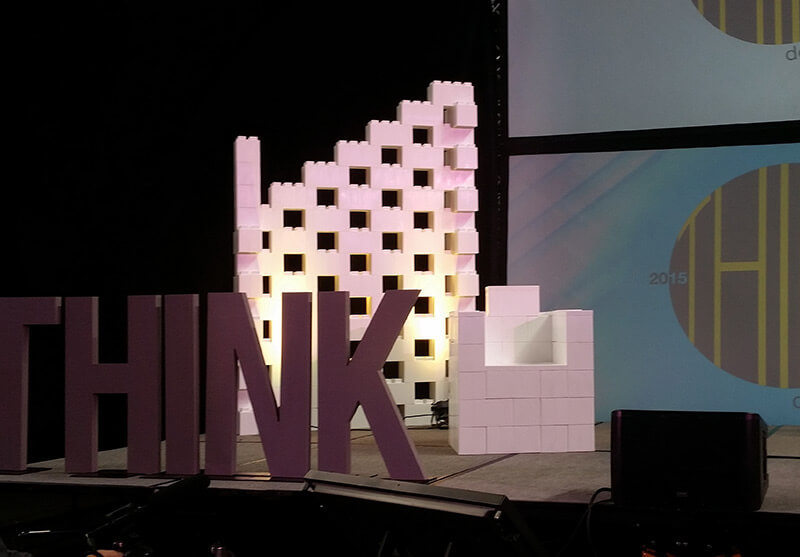
My other takeaway came when one of the students explained that, to be successful, we “adults” needed to learn how to be mentors—giving support when needed, but stepping back when new ideas were proposed that didn’t fit within our “old-school way of thinking.” Now, as a 37-year-old Gen-Xer, the idea of being labeled a) an adult and b) as having an “old-school way of thinking” was shocking. As I listened, I realized they were right; that the best thing I could do was encourage their ideas, listen, and give advice when I could, but to step out of the way and trust that, with the right tools, these students will lead Idaho to a better future.
Blog
Color can be a bold weapon in the brand wars. See how some brands hammer it home.
Blog
Get with the program or watch your SEO suffer.
Blog
Cookie-cutter design dominates this race.