Produce Only Mother (Nature) Could Love
BLOG
BLOG

I’m not as picky as I was when I was a kid. Apples with a big, mushy spot? I can eat around that. Over-ripe banana? I’ll deal with it. Same banana three days later? Blender, smoothie—good to go.
These not-so-pretty and past-their-prime fruits are OK in my book, but there’s zero chance they’d ever make it to a grocer’s shelves. Take that banana I was talking about. Before it’s ever loaded onto a truck it’s graded for shape, thickness and length, and highly scrutinized for any defects. Retailers accept only the very best and shoppers walk past all but the finest, most beautiful fruits and veggies. And that’s a problem for all of us.
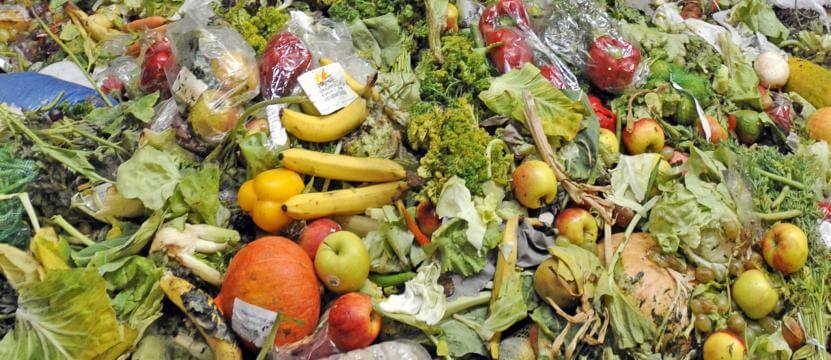
We’re talking food waste in the billions of pounds.
Lately I’ve been doing a lot of research on healthy eating and sustainable living, and one of the cooler things I’ve found is EndFoodWaste.org and specifically their “Ugly Fruit and Veg” campaign. The site was founded by self-proclaimed “food waste geek” Jordan Figueiredo, who works with the Castro Valley Sanitary District to help the community recycle, compost, and reduce waste in general. Now Figueiredo is looking at food waste beyond his California county, starting with what doesn’t even make it to your local grocery store. And that’s a heck of a lot of food.
According to the website, about 26 percent of produce in the U.S. never makes it onto store shelves:
This is mostly due to strict cosmetic standards from large grocers that dictate exactly how their fruit and veggies should look… This equals billions of pounds of good, healthy produce left uneaten because it doesn’t look pretty! If produce fails to make the grade for size, shape, or color it’s deemed “ugly” and unsellable.
And that’s a shame. So what’s Figueiredo doing about it? Well, for starters he’s got a petition he’d like you to sign.
Head on over to Change.org and join the more than 100,000 people who’ve already signed the “What the Fork” petition. You’ll be asking Whole Foods and Walmart to combat food waste by agreeing to sell “less than perfect” produce and market it in the same way they do the pretty stuff.
Why those two retailers? Because Walmart and Whole Foods proudly state their standards go above and beyond those outlined by the U.S. Department of Agriculture. And, according to ThinkProgress, the chains go so far as to discourage farmers from sending misshapen produce their way at all.
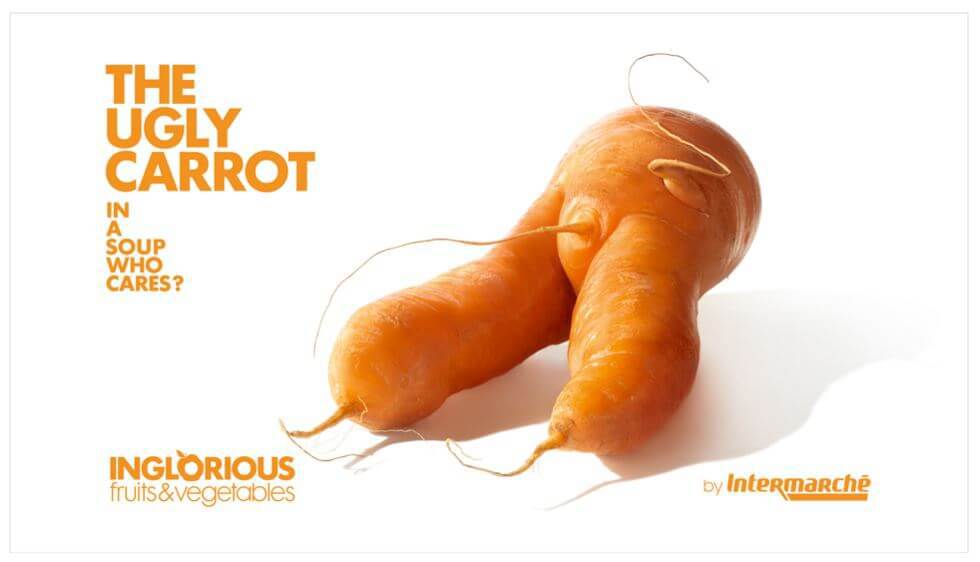
If this concept sounds crazy—a giant retailer willingly peddling homely honeydews—know that it’s already been done.
In 2014, the European Union kicked off the “Year Against Food Waste,” and French supermarket chain Intermarche took up the challenge with a promotion dubbed “Inglorious Fruits and Vegetables.” Through a multi-channel ad campaign, the chain brought people into stores where they found an aisle solely dedicated to misshapen produce. Intermarche even created soups and juices to show customers the food tasted just as good. They also discounted the produce by 30 percent to further incent shoppers. The reaction?
Still think there’s no money in misshapen melons?
So how did we get here? Despite economic fluctuations and periods of recession, we’ve had it pretty good these past few decades. Sadly, this has led to even more food going to waste. In fact, Dana Gunders, a staff scientist with the Natural Resources Defense Council, recently told TriplePundit that Americans waste 50 percent more food than they did in the ‘70s.
One reason is increased portion sizes in restaurants, a good deal of which is not consumed and goes straight into the bin. Gunders also notes the explosion of warehouse-type stores which allow us to buy in bigger quantities and at lower cost. Since less of our income is devoted to food, it becomes easier to justify buying big, then throwing out.
“We now have bigger refrigerators, cars and shopping carts—leading us to buy more food,” Gunders told TriplePundit.
“One out of six Americans is food insecure,” says EndFoodWaste.com, “and more than four out of five is produce-deficient. With statistics like this, it is simply irresponsible to encourage waste of good, healthy and perfectly edible food.”
Want some hard numbers behind the problem? Check out these stats via TriplePundit:
Clearly this is on us; we own this issue and we can do something about it.
Whatever you think of filmmaker/rabble rouser Michael Moore, the man made a fine point in a decade-old interview I still recall. Moore said it’s much easier to get people to pay attention to your cause if you inject a little humor into it. And that’s just what Figueiredo has done.
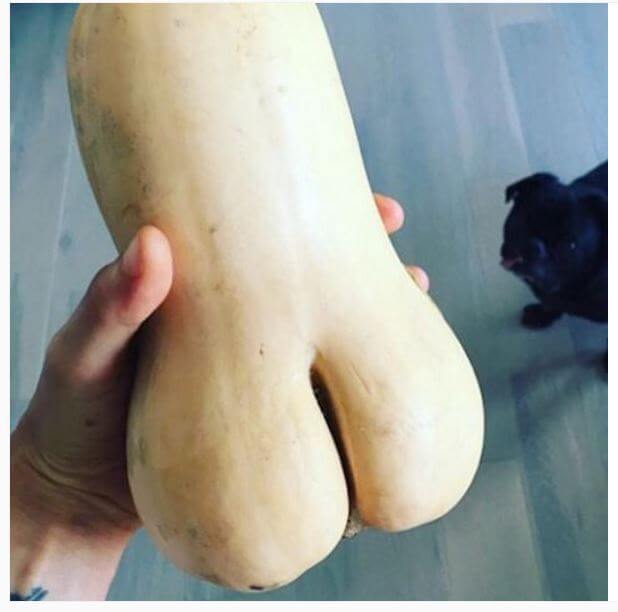
His call to action is no joke, but Figueiredo is building awareness and engagement by making it fun. Several times a week The Ugly Fruit and Veg Campaign posts pictures of twisted, bizarrely shaped produce to its Facebook, Twitter, and Instagram channels. The posts are a hit: Deformed produce is portrayed in a whimsical manner that makes it embraceable—loveable, even. A mutant four-leaf-clover tomato generated 500 likes on Instagram. A derriere-shaped butternut squash topped 600 likes. Comments included “butt-or-nut squash,” and “cheeky butternut.” I’ve seen posts top 700 likes. People are not only getting the message, they’re having a little fun with it along the way.
Another great example is the documentary “Just Eat It: A Food Waste Story.” The film follows a real-life Vancouver couple who, fed up with the amount of food waste they’re seeing, resolves to eat nothing but discarded food for six months. I wouldn’t go so far to say that hilarity ensues, and there are some moments when dumpster diving starts to take its toll on the couple, but the whole thing is shot in a light-hearted manner that nevertheless makes a hell of a good point. Several, actually.
It is, albeit slowly. While it’s been slow to catch on, some states have begun to require commercial enterprises to divert a portion (or even all) of their organic waste from the landfill. And then came the big one.
On Sept. 16, 2015, the federal government announced an endeavor that seeks a 50-percent reduction in food waste by 2030. Unlike previous campaigns, this new initiative brings some heavy partners into the fold including private enterprise, and state and local governments. This one just may have some teeth.
A quote from the press release says it all: “Today's announcement presents a major environmental, social and public health opportunity,” said Gina McCarthy of the Environmental Protection Administration. “Let’s feed people, not landfills.”
Blog
These three new food companies are revolutionizing the food industry.
Blog
Their food isn't healthier. It's not cheaper. So what's the difference?
Blog
A brand and packaging project for a product that's deep, down good (for you).