Why Chipotle is Eating the Competition's Lunch
BLOG
BLOG

I like to think of my generation coming of age in the 80’s as the first one weaned on fast food. Our moms were entering the workplace en masse. They had a lot less time to cook and we kids didn’t complain when the family car swerved into the drive-thru lane at dinner time. Twenty-five cent hamburgers? I’ll have ten.
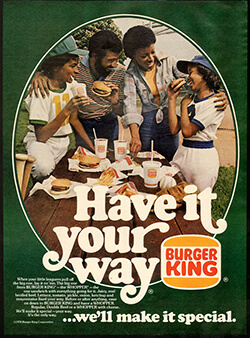
For the longest time, the fast food business model seemed invincible. The McDonald brothers’ application of assembly line techniques to restaurant kitchens—nicely chronicled in Eric Schlosser’s Fast Food Nation—has minted thousands of millionaires since the 1950’s.
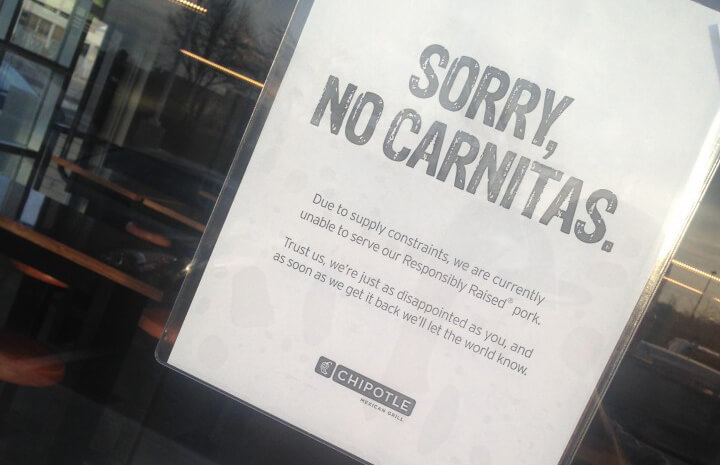
So two recent news items jumped out at me: 1) McDonald’s same-store sales have been falling since 2013, and 2) Chipotle is selling so much humanely raised pork that it had to suspend sales of certain products because it can’t find enough suppliers to meet demand. Chipotle’s stock is up 37% this year alone.
We talk a lot around here about how people are voting with their wallets, rewarding or punishing companies over the way they make or source their products. Like so many companies, most fast food chains are behind the curve on this one—and now it’s starting to hurt them.

Steve Ells started Chipotle in 1993 with a single location in Denver. If I recall correctly, the chain’s original advertising focused primarily on the size of their ginormous burritos. His business exploded to 500 stores within just a few years.
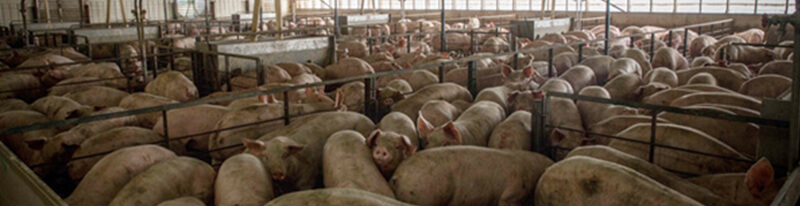
Then something happened. In 1999 Ells read an article about CAFO’s (concentrated animal feeding operations) where pork is grown on a grand scale. He was so disturbed by what he read that he set out to change the way his company sourced its pork and other ingredients.
Two years later, Chipotle launched it “food with integrity” campaign, highlighting their choice to serve naturally raised beef and pork, free of antibiotics and hormones. The campaign has been a huge creative and commercial success, perhaps best encapsulated in Chipotle’s “Scarecrow” video from 2013, now approaching 14 million views on YouTube.
The fact is the slaughterhouses that process Chipotle beef and pork probably look very similar to those of fast food chain suppliers—it’s still industrial food production on a massive scale. But Chipotle has fostered enough trust with their customers that they don’t need to try to convince them with a behind-the-scenes factory video that they’re doing the right thing.
The enormous power of Chipotle’s brand positioning was on full display in the news stories about their shortage of humanely raised pork. What would normally have been a financial setback became a powerful story about their commitment to wholesome ingredients and the popularity of their products, delivered worldwide by the media at a cost of $0. That’s genius.
What you make is only part of what you sell. Most fast food is cheap, fast and (arguably) delicious. That was and likely will continue to be a profitable formula. But that’s not enough for a significant and growing number of people who consider the health and environmental impacts of their purchases. This is especially true in categories that touch people directly: food, health & beauty, kids products, etc. If you haven’t started to develop and share this part of your story—and made the operational changes to substantiate it—you need to because…
You can’t hide behind huge anymore. Once upon a time, large companies had more control over how much people could learn about their business practices. Not anymore, not when everyone has a video camera in their pocket and a YouTube account. Just ask the cruise line that got caught throwing garbage bags into the ocean last year.
Don’t wait until it becomes a crisis. Scrutiny over food ingredients and sources has been growing for a long time. I can’t imagine someone at these chains didn’t see this coming, but for some it’s a case of too little, too late. That’s too bad. If there’s one industry that could have demanded more of their suppliers and made a more positive health and environmental impact, it’s fast food. And they would have gotten enormous credit for it.
This is just the beginning for the food industry. With the twin issues of obesity and global warming, more and more people, including lawmakers, are taking a hard look at how their food is produced. The time for food companies to take a more thoughtful approach was yesterday.
Are traditional quick-serve restaurants going away anytime soon? No, not even close. But this shows level of anxiety among consumers, and the size of the opportunity for chains that make improving food production practices a part of their purpose and positioning.
When it comes to this conversation, food companies will either be at the table or on the menu.
Blog
Companies align around shared values.
Blog
These three new food companies are revolutionizing the food industry.
Blog
A brand and packaging project for a product that's deep, down good (for you).