Shut the Front Door: REI Goes Dark on Black Friday
BLOG
BLOG

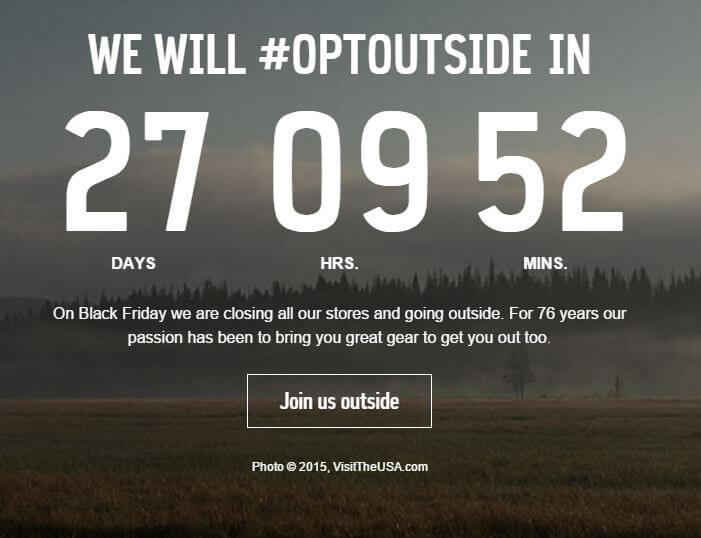
Unless you have no access to television, the internet or newspapers, you’ve likely heard the news: REI will close its doors on Black Friday. All 143 stores, its two distribution centers, its corporate headquarters—even its website. Instead, employees will be encouraged to “take it outside” and do something fun and healthy in the great outdoors. They’ll also be paid for the time off. Yes, all 12,000 employees, paid. I’ll give you a moment to take this all in…
How could one of the nation’s largest retailers and arguably the biggest outdoor-equipment chain close up shop during the wet-hot orgy of capitalism we call Black Friday? Well, because REI is actually a pretty cool company. Have a look.
Recreational Equipment Incorporated (REI) was founded nearly 80 years ago as a co-op, and it still is today. The privately held company allows anyone to shop in its stores, but customers are encouraged to become members. They treat their members well and they’re pretty dang good to their employees, too. The company has been named one of Fortune’s “100 Best Companies to Work for” every year since the magazine first published the list back in 1998. (Side note: We treat our employees real nice, too.)
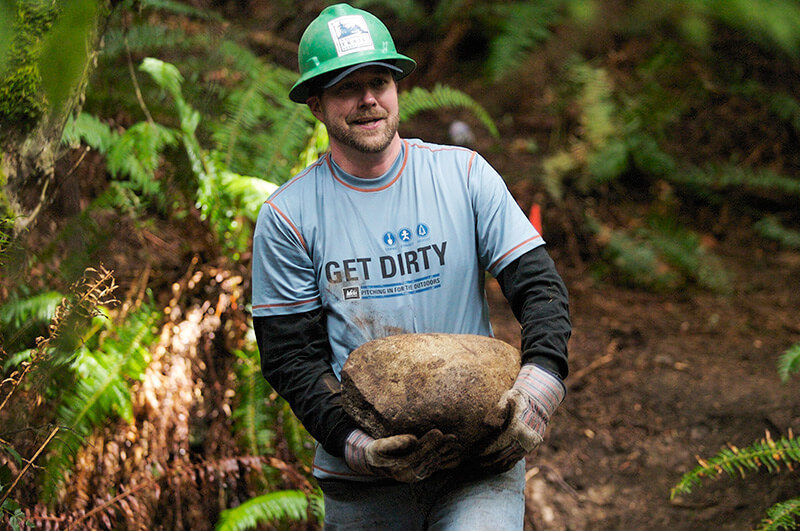
They also do a great job of giving back to the communities they serve. They give a portion of their yearly profits to initiatives aimed at protecting the environment and promoting outdoor recreation. They give grants to encourage outdoor volunteerism. And they have a very generous corporate giving program through the REI Foundation, a 501(c)3 nonprofit founded back in 1993. If you want to see more, check out their 2014 stewardship report.
Given all this corporate goodness, is REI’s Black Friday move really such a surprise?
“We think that Black Friday has gotten out of hand,” said REI President and CEO Jerry Stritzke in an open letter to the company’s 5.5 million members. Instead of employees spending the day in store aisles, Stritzke said, the retailer chose to “invest in helping people get outside with loved ones this holiday season.” Given Black Friday is one of REI’s top sales days, that’s pretty damn cool.
So if you’re an employee, how does this make you feel? Maybe you’ll give an extra ounce or two of sweat once the doors reopen? And shoppers, hearing of the company’s largesse, might perhaps spend their holiday dollars at REI instead of Big 5 or Sports Authority. And the media? Forget it. REI’s announcement garnered them more ink and online pixels than they’ve seen in the last 10 years combined.
In his letter, Stritzke goes on to urge members to “join us and inspire us with your experiences.” (Hint hint, take pictures and share them on social media with the REI-created hashtag #OptOutside.)
Taking nothing away from what REI’s done, this is more than just holiday goodwill towards men (and women), this is just good business.
So how will other retailers react? Does this mark the beginning of a trend?
“REI’s announcement reflects more than just how tired its customers are of Black Friday,” writes Bourree Lam in The Atlantic, “it reflects how tired many Americans are as well.” Lam goes on to cite a National Retail Federation study that shows just 55 percent of shoppers spent money during Thanksgiving weekend in 2014, 42 percent of which was online. So has the time finally come to stick a fork in this post-feast feeding frenzy?

Yes, says Nikki Baird, writing for Forbes. Baird called REI’s announcement a “death knell for the weekend's importance in retail,” and went on to say she expects more retailers to “take a lifestyle stand against Black Friday.” Beyond lifestyle decisions, Baird makes some strong points for doing away with Black Friday.
“If retailers want to compete for share of budget, that fight is now won and lost online first—and well before Black Friday,” she wrote. After all, consumers have limited budgets and a set amount they can reasonably spend. Over the years, retailers have gotten greedy and inched Black Friday closer—and even into—Thanksgiving Day. First it was midnight Friday openings, then it moved to Thanksgiving evening. “That tactic didn’t work,” Baird says, citing data from ShopperTrak. “All it did was spread the same consumer spending over a longer time period, and added expenses to retailers’ operations at the same time.”
Yes, yes it is. REI—like Oliver Russell—is a purpose-driven company. And if you want to know what that’s all about, we can tell you, and show you how to build one of your own. REI always has been, but they’re realizing they need to tell customers about it. Again.
As mentioned earlier, REI began as a co-op and remains one today. Now it’s time to give customers a gentle reminder.
“A lot of people know we are a co-op, but don't know what that means,” REI Chief Creative Officer Ben Steele told The Washington Post. “We really wanted, in this moment in time, to have something that emphasizes how this organization is different.”
For readers who aren’t familiar with the co-op model, The Post explains it as “a business that's owned not by shareholders but by members.” All profits are either “redistributed to members or reinvested in the business.” To hammer this point home, REI recently integrated the word “co-op” into their logo.
Why? Jena McGregor, writing for The Post, puts it nicely:
In an era with engaged consumers, more corporations touting their social responsibility, and even new corporate structures like B Corporations that have sprung up to focus beyond traditional shareholder capitalism…it makes sense for REI to spotlight its co-op identity.
“Clearly [companies are] seeing their social purpose…has value again,” REI’s Ben Steele said, “and it's something they want to lift up and share.”
With the Black Friday announcement and their ongoing efforts around corporate responsibility, REI may have just shown the retail world that, yes, there is indeed a Santa Claus.
Blog
When sustainability brands band together, everybody wins (but especially Target).
Blog
Companies align around shared values.
White Paper
Welcome to the end of this series, which is really your beginning. You’ve done a lot of heavy lifting to this point, creating a brand foundation and proving your purpose through independent verification. Now your journey gets interesting, and perhaps even more rewarding, as you set out to share your purpose.