The Road to Renewables: Tackling Energy Storage
BLOG
BLOG

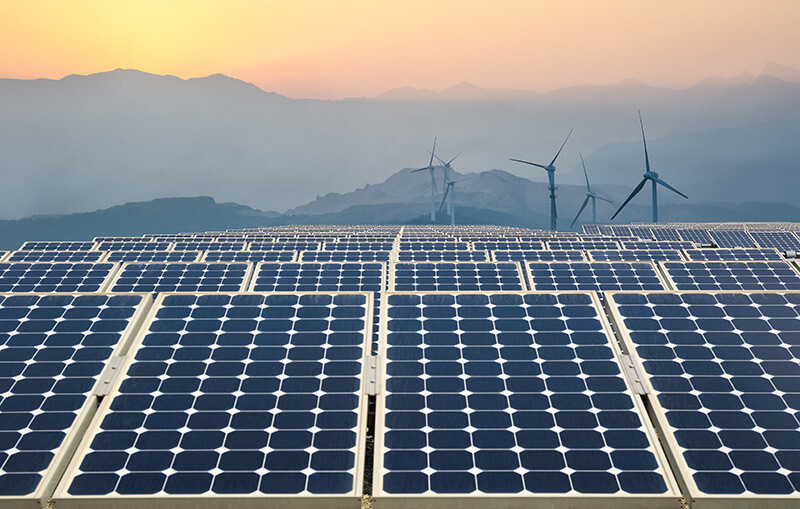
It’s an exciting time in the world of battery technology and energy storage. Wait, don’t leave! It takes guts to write a lead like that, so hear me out for a bit.
Energy storage is going to be huge. Huge. Big business, big ramifications. It will fundamentally change—and likely disrupt—the current utility industry model. It will make for a more secure power grid, allow the world to effectively harness and transition to renewable energy, and render the term “blackout” obsolete. Some of these things will take time. Some are just around the corner.
Before we get to “the what,” let’s talk about “the why.” At Oliver Russell, we’re big on renewable, sustainable, low-carbon/no-carbon energy—who wouldn’t be? We’re keen to work with like-minded firms who are invested in new types of energy sources and services, and who could use a little help in the areas of marketing or branding. There’s no turning back now; the world is marching down the renewable road. But there’s a big stumbling block: storage.
Right now, the terms “renewable energy” or “green power” typically conjure visions of wind farms and solar arrays. There’s a lot more to it for sure, but right now those are the two biggies. And that’s great. Turbine technology is evolving, and solar panels are getting cheaper and more efficient every day.
But there’s still the issue of storage. And that’s because the wind don’t always blow and the sun don’t always shine. Because that’s the case, something has to be running in the background to keep the lights on. Right now that pretty much means coal and natural-gas plants, and hydropower.
Until we have big, robust, utility-scale batteries (or other types of storage mechanisms), we’re stuck. In the near term, though, let’s see what a billionaire entrepreneur and inventor has in mind.
Leave it to Elon Musk to make energy storage relevant, (somewhat) affordable, and cool. Should we really be surprised?
This is the guy who brought us Tesla, and whose cars are an absolute marvel of engineering. Think it’s easy to build a car company from scratch? Since 2001 we’ve lost Plymouth, Oldsmobile, Saturn, Pontiac, Mercury, Saab…
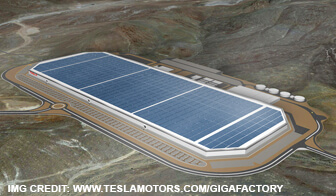
Musk also launched SpaceX, a company that designs, manufactures, and launches spacecraft. Which is kind of cool. Getting back to Earth, he’s also trying to revolutionize mass transit with the Hyperloop, a high-speed system that puts people inside capsules inside tubes and hurls them around the country. How fast? Think L.A. to San Francisco in 30 minutes. And then there’s the Gigafactory, a $5 billion battery factory that’s powered by a massive solar system and three times the size of Central Park.
This guy thinks batteries are cool, so maybe you should, too.
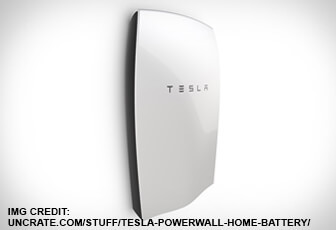
Musk’s latest must-have item stores power and hangs on your wall. He calls it the Powerwall. (Elon, next time come to us. We could have helped with the branding.)
Or maybe not. Maybe the Powerwall is so subtly named because it’s not supposed to draw attention. It hangs on the wall, does its job, and stays out of your way. Much like Apple products, the Powerwall just works, and simplicity is the name of the game. And it’s that simplicity that draws you in.
Marketed under the Tesla brand, the Powerwall comes in two sizes, 7 kilowatt hour (kWh) and 10 kWh, and multiple units can be daisy-chained together for even more storage. The target market is people with home solar arrays, people looking to get off the grid, or people looking for backup power in case of an outage (or a combination of all three). The two models are quite a bit different on the inside, and are really meant to serve two different purposes. As with everything in life, there are tradeoffs.
Solar users will want the smaller model, as its lithium nickel-manganese-cobalt cells (like what you’d find in power tools) are made for daily cycling. What that means is that the unit soaks up solar energy during the day, then feeds it back into the home (or into the grid) at night. Wash, rinse, repeat. However, with just 3.3 kW of peak power on tap, it would be hard pressed to completely power an average-sized home with all its appliances, HVAC, etc. What it can do is provide a way for solar users to better utilize their energy, offset a significant portion of their daily usage, and drastically cut their power bill.
The larger model, while beefier, uses lithium nickel-cobalt-aluminum cells, which don’t work well for daily cycling. This model is primarily for backup or emergency energy storage, and isn’t suited for the daily charge/discharge pattern solar users require. What this unit provides is peace of mind; owners will have emergency power on tap and on demand without the need to own a noisy, smelly generator, and store fuel.
Not everyone is sold. A troubling May 2015 article in Bloomberg pointed out the shortcomings of the Powerwall and raised some interesting questions around what should be one of the technology’s biggest proponents—SolarCity.
Author Tom Randall noted that SolarCity (the largest solar provider in the U.S.) was not recommending or installing the solar-friendly 7 kWh model. Jonathan Bass, SolarCity’s VP of communications, told Bloomberg it simply didn’t pencil out; most solar users would be better off financially by selling—not storing—their energy. For the time being, Bass said, SolarCity’s only Powerwall option would be the larger, reserve-power model. According to the company’s website, it appears it’s still the only option.
Bass later said SolarCity intends to offer the 7 kWh model at some point down the road, and Musk himself noted the smaller model was never really intended for the U.S. market. Apparently the 7 kWh model is better suited for places like Germany and Australia, where “solar power is plentiful and traditional power is expensive.” Which is true.
So has Musk laid an egg on this one? Not likely. In the U.S., the Powerwall is sold out through the middle of 2016, and Tesla has 38,000 preorders in hand.
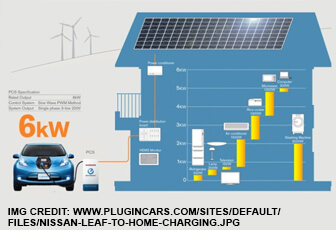
For the average homeowner, the fact is—right now—neither Powerwall unit will provide complete energy/grid independence. But it’s coming. In fact, Tesla already has announced Powerwallversion 2, coming in the summer of 2016. How is it different? No word yet.
In the long run, the trajectory for energy storage is up. If you applyMoore’s Law to the Powerwall—and to storage in general—then the likely scenario is that technology will improve rapidly, and costs will go down proportionally. A world where inexpensive rooftop solar feeds into robust batteries capable of powering the average home is likely not far off. One very interesting bit of emerging tech is vehicle-to-grid (V2G) integration. This model uses the battery in your electric vehicle to store and deploy energy. It’s very cool and very attainable.
What’s further off, barring some technological breakthrough, is utility-scale storage. The technology simply isn’t there and the price makes it not even worth considering. Still, price is coming down and there are some interesting solutions being tested. Check out what people are doing with molten salt and flywheels, for example. Even low-tech equipment such as your existing hot-water heater is a potential storage mechanism.
If you made it past the opening sentence, thanks. Stay tuned, things are only going to get more interesting.
Blog
Millennials are changing the way most industries do business - and energy is no exception.
Blog
Consumer demand is quickly pushing energy in new directions.
Blog
Motorsports help make science, technology, engineering, and math cool.