Top Trends for Corporate Social Impact in 2015
BLOG
BLOG

We look forward to receiving insights from trendwatching.com, especially its annual prognostications for the top trends in the upcoming year.
This year our eyeballs did a major pop as we read through its list of top-ten trends for 2015 and discovered that nearly a third of the top ten trends align with a subject of keen interest to us and to our clients—how brands will be using their influence, resources, and communities to create impact through corporate social responsibility.
(Our firm is a certified B Corporation that builds brands for purpose-driven companies, so this is our bread and butter and it would appear the trends are converging to add a little more butter for our clients.)
The three trends landing on trendwatching.com top-ten list were Branded Government, coming in at #5; Currencies of Change, at #7; and Brand Stands, winding up the trend list at #10. You can see the complete list, along with ten actions that are prime for innovative opportunity, at Marketing Trends 2015.
If you want a quick, top-line takeaway before you run to your next meeting, here it is: companies will increasingly become proactive agents for social change, occupying a newfound and powerful role as market disruptors in the civic, nonprofit, and social/environmental arenas.
Why? Well, companies will be doing this because they will be behaving, in some regards, as companies always have—they will be responding to consumer demand. As is usually the case with social change, much of this push is fomented by youth, in this instance the Millennial generation. Unlike previous generations, protests aren’t necessarily taking place in the streets—they’re happening at the cash register or online shopping cart. (We’ve written extensively on this generation, including a white paper about Millennials and corporate social responsibility.
So let’s take a look at the first trend, Branded Government, the confluence, or perhaps overlap, of government and the private sector. The idea here isn’t just that the two entities will be working together more closely, but that companies will be taking the extra step by working independently to effect positive social change. Municipalities, counties, and states—all the way through the Federal government—are confronting escalating problems and needs for services and infrastructure with the handcuffs of constrained funding. For its part, trendwatching.com sees progressive brands initiating, undertaking or supporting meaningful civic transformation to address this gap. Brands, as well as private foundations and individuals, will be stepping in to fill the void—with financial support, influential networks, brainpower and person-power. We believe the key insight here is that companies won’t be waiting for an invitation—they will be proactively initiating solutions and sometimes pulling government along with them.
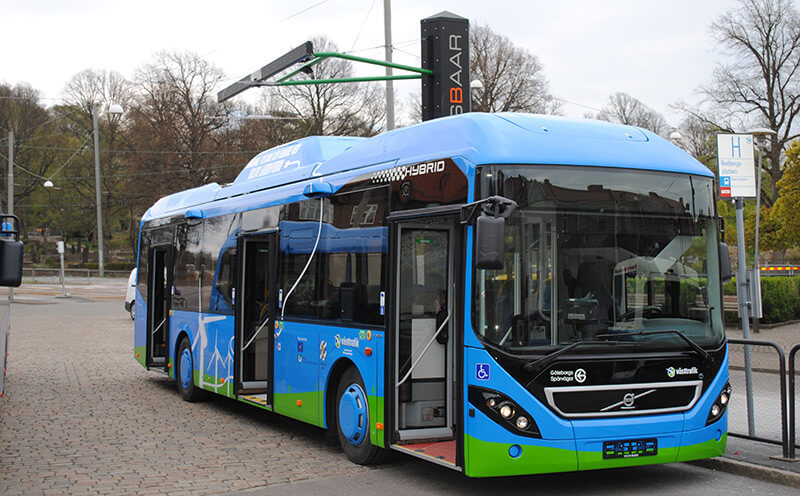
In May 2014, Volvo partnered with the Swedish Transport Authority on the ElectriCity project to create roads that can charge electric vehicles. Features will include inductive charging that can wirelessly transmit power to the city of Gothenburg's electric bus fleet.
Again, here’s the marketplace “why” of it. Consumers understand the dilemma of growing needs and dwindling resources and are looking for companies to become more involved. Indeed, 73% of the Millennial generation doesn’t believe governments can solve today’s issues alone, and 83% want businesses to get more involved.1
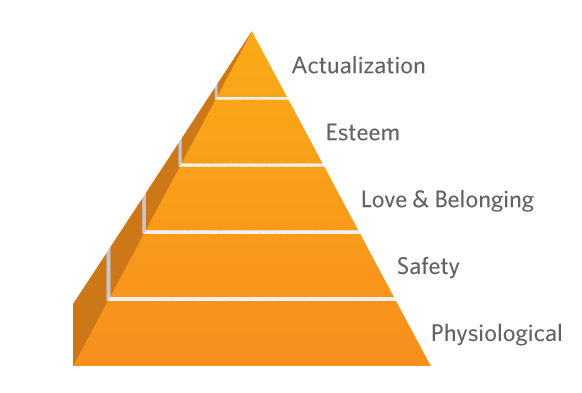
The next trend, Currencies of Change, refers to a reversal in the value exchange between companies and consumers. Trendwatching.com says that consumers, in their search for wellness, strength, new skills and knowledge, will embrace device-fueled rewards, from wearables, smart phones and other emerging technologies, that incentivize improving behaviors.
Brands, long viewed suspiciously by consumers as serving only their own self-interest, i.e. bottom-line profit, will be called upon to act as catalyst and coach for consumers. For purpose-driven consumers, this likely entails demonstrating that brands care about their customers beyond the transactional experience and actually share like-values. Brands will fulfill the self-interest of their consumers and will go a step further by helping customers actualize via their brand relationship. This will be aided through measurable and transparent corporate social responsibility. One likely scenario is for brands to provide rewards to not only the consumer, but to the social cause of the customer’s choosing as well.
The last trend, Brand Stand, is perhaps our favorite of the bunch. It’s potentially the most provocative and interesting of all the predictions. Here’s what trendwatching.com has to say about it: “In 2015, winning brands will start contentious, painful, and necessary conversations.“
Did you get that? Winning brands. Start. Contentious. Painful. Wow.
You don’t often see these words clustered together in the business world. Companies and their brands have traditionally been like politicians on the stump, hewing a considered, cautious, and noncontroversial approach for fearing to offend their customer base. Their public bottom line-party line toward advocating on social and environmental issues has always been largely milquetoast, vanilla, bland—anodyne.
Money. That’s why. And a ferociously competitive marketplace that is compelling companies to take a brand stand as a way to differentiate and stand out by standing for something. It’s an avenue for smart brands that want to resonate and be relevant—current—in a broader context, invaluable in a crowded world of content cluttered with insipid companies and me-too products.
That alone might be enough, but here’s the broader context creating the space here—consumers want companies to take a stand. Why? Well, we hate to keep dragging it out, but get ready for the “M” word again. More and more, purpose-driven consumers—led by Millennials—want to know what a brand stands for—and perhaps more tellingly, what a brand is against—so that they can align their purchasing and loyalty with brands around shared values. We’ve written quite recently about the dynamic of shared values, and fresh research supports this—nearly three-quarters of Millennials believe business should have and share a point of view about issues and use their influence and networks to get others involved in an issue.2
And let us not forget, Millennials represent the largest generational economic force in the history of our country.
Contentious social and environmental issues will be at the leading edge of these conversations. Even in our own small way at Oliver Russell we are practicing this type of opinion-led advocacy. This year we have come out publically in support of two controversial issues: We joined the amicus brief in the 9th District Circuit Court to make a business case for marriage equality, and we joined with other businesses in calling on the President to protect a large wilderness area in Idaho, the Boulder White Clouds, as a National Monument.
Simply put—the risk of not taking a stand will become greater than the danger of doing so. Your brand needs to demonstrate leadership, take a forceful and public position on an issue that truly matters—to your employees, to your consumers, to your supplier-partners, and to your community, whether that’s local or global.
Remember, these are trends, not fads. And while these trends still lie within the realm of prediction, they are based on longer-term movement in the markets and consumer behavior and attitudes. That’s probably the most interesting thing about this. Companies respond to consumers. And on these trends, dear brands, your customers are waiting on you.
Sources:
1 MSLGROUP, September 2014.
2 MSLGROUP, February 2014.
Blog
Practicing and measuring CSR will gain importance in the year(s) to come.
Blog
We chronicle 12 months of measurable impact in our first public benefit report.
Blog
The Millennial generation is looking to take meaning on the move.